Before you book an iPhone screen repair in Orlando, five things are worth knowing: what kind of screen damage you actually have, whether the shop uses OEM or aftermarket parts, whether the repair keeps True Tone and Face ID working, how long it takes, and what warranty comes with it. Get those straight and you will pay a fair price for a screen that lasts, instead of a cheap one that fails in a few months. This guide walks through each one, plus what actually happens during the repair, so you know exactly what to expect before you hand over your phone.
Not all iPhone screen damage is the same
When people say their iPhone screen is "broken," they can mean very different things, and the type of damage decides the repair.
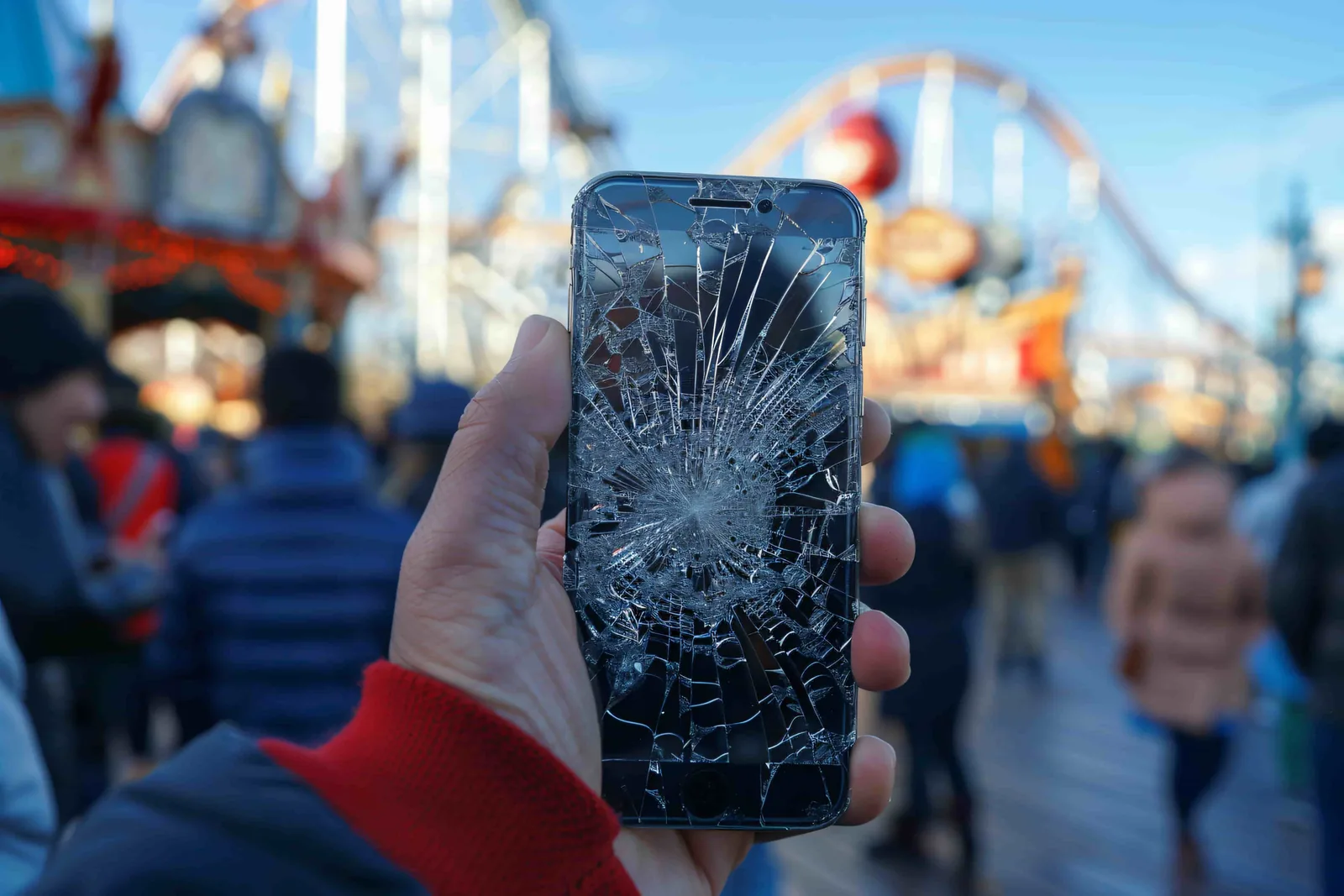
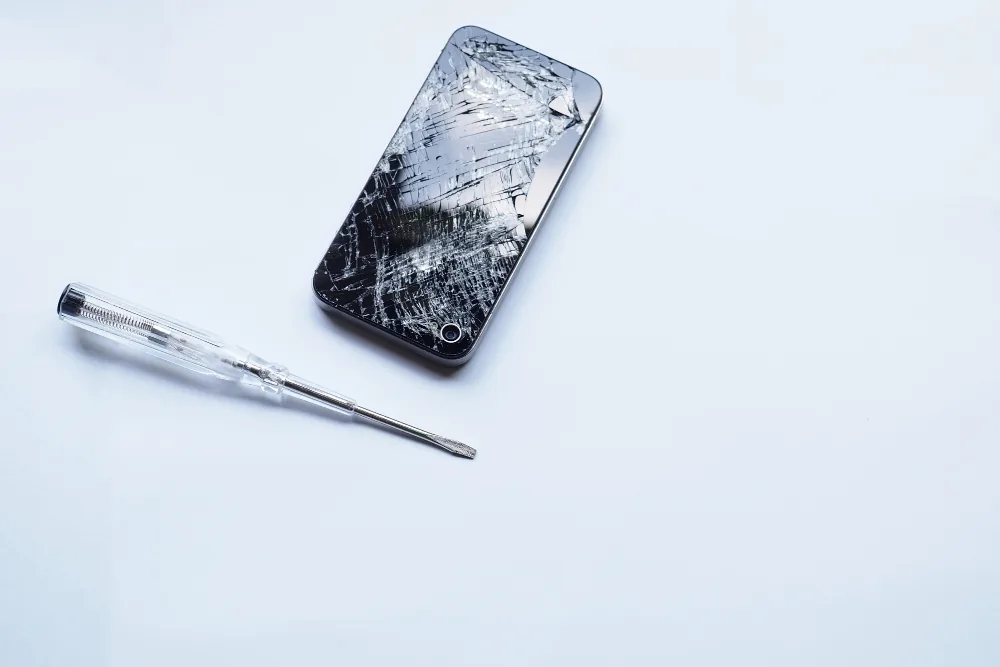
- Cracked glass. The most visible kind. The outer glass is chipped or spiderwebbed, but the display still lights up and touch still works.
- Unresponsive or erratic touch. You tap and nothing happens, or the phone registers taps you never made. That points to the digitizer, the touch layer under the glass.
- Display problems. Lines, colored bands, blotches, dead spots, or a black area mean the OLED or LCD panel itself is damaged, not just the glass.
- Ghost touch. The screen selects, scrolls, or types on its own, as if a phantom finger were driving it.
Often you get more than one at once, and a small crack rarely stays small. Moisture and dust work into the break, and a hairline crack can turn into dead pixels or touch failure weeks later, which is one reason not to sit on it. If you want the full picture on why a crack is more than cosmetic, see why you should not ignore a cracked screen.
What an iPhone screen replacement actually involves
A modern iPhone "screen" is not a single sheet of glass. It is a laminated stack, the outer glass, the digitizer that senses touch, and the OLED or LCD display, all fused into one thin unit roughly half a millimeter thick. Because those layers are bonded together, they usually cannot be separated cleanly.
That is why glass-only repair, replacing just the cracked outer layer, is rarely offered. Separating the glass from a working display is slow and easy to ruin, so most shops do a full-screen replacement instead, swapping the entire assembly as one part. The practical takeaway: a light surface crack and a shattered, dead display often cost the same in labor, because the fix is the same job either way.
OEM vs. aftermarket iPhone screens, and why prices vary
The single biggest factor in what you pay, and in how the repair holds up, is the part itself. iPhone screens come in tiers:
- OEM (original equipment manufacturer). Panels built to Apple's own spec, closest to the screen you started with.
- Refurbished OEM. An original Apple display with fresh outer glass installed, common at reputable independent shops.
- High-grade aftermarket. A quality third-party panel, a solid value if it is the good tier.
- Low-grade aftermarket. The cheapest panels, and the reason "too good to be true" pricing exists.
Two things drive the price. First, the display technology: newer iPhones use OLED, which costs more than the LCD screens on older models, so a newer phone is simply a more expensive repair. Second, the part tier: OEM and refurbished-OEM cost more than aftermarket. A rock-bottom quote almost always means the cheapest panel, which can look dimmer, wash out in sunlight, feel sluggish to the touch, or fail within months. It is fair to ask a shop exactly which tier they are installing. At URPhone Store, iPhone screen repair starts from $50, depending on your model, and the quote is free, so you can compare before you commit.
True Tone, Face ID, and water resistance: what a screen swap can affect
This is the part most price-shoppers miss, and it is where a bad repair does lasting harm.
- True Tone. True Tone calibration is tied to your specific display. Swap in an aftermarket screen without transferring that data, and True Tone often disappears or greys out in Settings. A shop with the right tools can preserve or re-pair it; a rushed job cannot.
- Face ID. The Face ID sensors live in the notch or Dynamic Island, separate from the display panel, and they get carefully moved over to the new screen. Done properly, Face ID keeps working. Handled roughly, a torn sensor flex can disable Face ID permanently, and no replacement screen brings it back.
- Auto-brightness and the "unknown part" notice. Apple pairs some components to the phone, so an uncalibrated swap can break auto-brightness or trigger a warning that the display is not genuine.
- Water resistance. The factory adhesive seal is single-use. A good technician re-seals the phone with fresh adhesive during reassembly, which restores much of the resistance, but the original factory rating can never be fully guaranteed once a phone has been opened.
One reassuring note: because these parts are paired to your phone's logic board, tampering is obvious and traceable, so a reputable shop has every reason to reinstall your original sensors rather than harvest them. When you pick a trustworthy iPhone repair in Orlando shop, protecting these features is part of the job, not an afterthought.
What to expect during the repair, step by step
A straightforward iPhone screen replacement is a tidy, well-practiced process. Here is what a good shop actually does.
- Back up first. Before anything, back up to iCloud or a computer. A screen swap should not touch your data, but a backup means a surprise never costs you your photos.
- Assessment and quote. The technician inspects the damage, checks for a bent frame or other hidden issues, and gives you an upfront, model-specific price. At URPhone Store this diagnostic is free.
- Power down and open. The phone is powered off, the two bottom pentalobe screws come out, and gentle heat softens the adhesive so the old screen can be lifted.
- Disconnect and transfer. The display's ribbon connectors are unplugged, and your original components, the earpiece mesh, sensor and Face ID flex, and brackets, are moved onto the new screen.
- Install and test. The new display goes in, then it is tested across the whole surface: touch response, brightness, True Tone, Face ID, the front camera, and the ear speaker.
- Reseal and reassemble. Fresh adhesive goes down to restore the seal, the screws go back, and the phone is checked one last time.
Most single-screen repairs run about 30 minutes to an hour, and many are done while you wait. Same-day service is the norm when parts are in stock. The main thing that stretches the timeline is a surprise the crack was hiding, a swollen battery, a damaged front camera, or a bent frame, in which case a good shop stops and quotes the extra work before touching it, rather than springing it on you at pickup.
Warranty and cost: what you should expect
Cost is model-dependent. iPhone screen repair at URPhone Store starts from $50, depending on your model, with newer OLED phones costing more than older LCD ones. The quote is free, so there is no charge to find out. Be cautious of pricing far below everyone else, since that usually signals the cheapest panel and skipped calibration steps.
Just as important is what backs the repair. Every qualifying repair at URPhone Store comes with a 1-year warranty on parts and labor (does not cover new accidental or liquid damage after the repair). That warranty is the real difference between a lasting fix and a gamble: if the panel or touch layer fails on its own after the repair, it is covered. A cheap corner-shop price with no meaningful warranty is not the bargain it looks like.
If your iPhone is very old, or the cracked screen is one of several problems, it is worth pausing to ask whether a repair is even the right move. Our guide on whether it is cheaper to fix a phone or replace it walks through repair cost against the device's age and value, so you are not pouring money into a phone you were about to retire.
Questions to ask before you book
A trustworthy shop will answer all of these openly. If you get dodged, that is your answer.
- Is the screen OEM, refurbished OEM, or aftermarket, and which tier?
- Will True Tone, auto-brightness, and Face ID still work afterward?
- What warranty comes with the repair, and how long does it last?
- Will my water resistance be restored with fresh adhesive?
- How long will it take, and are the parts for my model in stock today?
- Is this quote all-in, or could it change if you find more damage?
Where to get iPhone screen repair in Orlando
If the fix is beyond a settings tweak, this is where to get it done right. At URPhone Store, our technicians handle iPhone screen repair every day, using quality OEM and high-grade aftermarket parts, preserving Face ID and True Tone where the phone allows, and re-sealing the device for water resistance. iPhone screen repair starts from $50, depending on your model, the diagnostic is free, and most repairs are same-day when parts are in stock, all backed by a 1-year warranty on parts and labor (does not cover new accidental or liquid damage after the repair).
We run three iPhone repair in Orlando locations open seven days a week, Mon-Sat 9 AM to 9 PM and Sun 10 AM to 9 PM, and we service most major brands, including Apple, Samsung, Google Pixel, OnePlus, LG, and Motorola, with financing through Acima and insurance accepted.
To book, Call (321) 300-2023 or schedule online, and we will have a model-specific quote ready before any work begins.